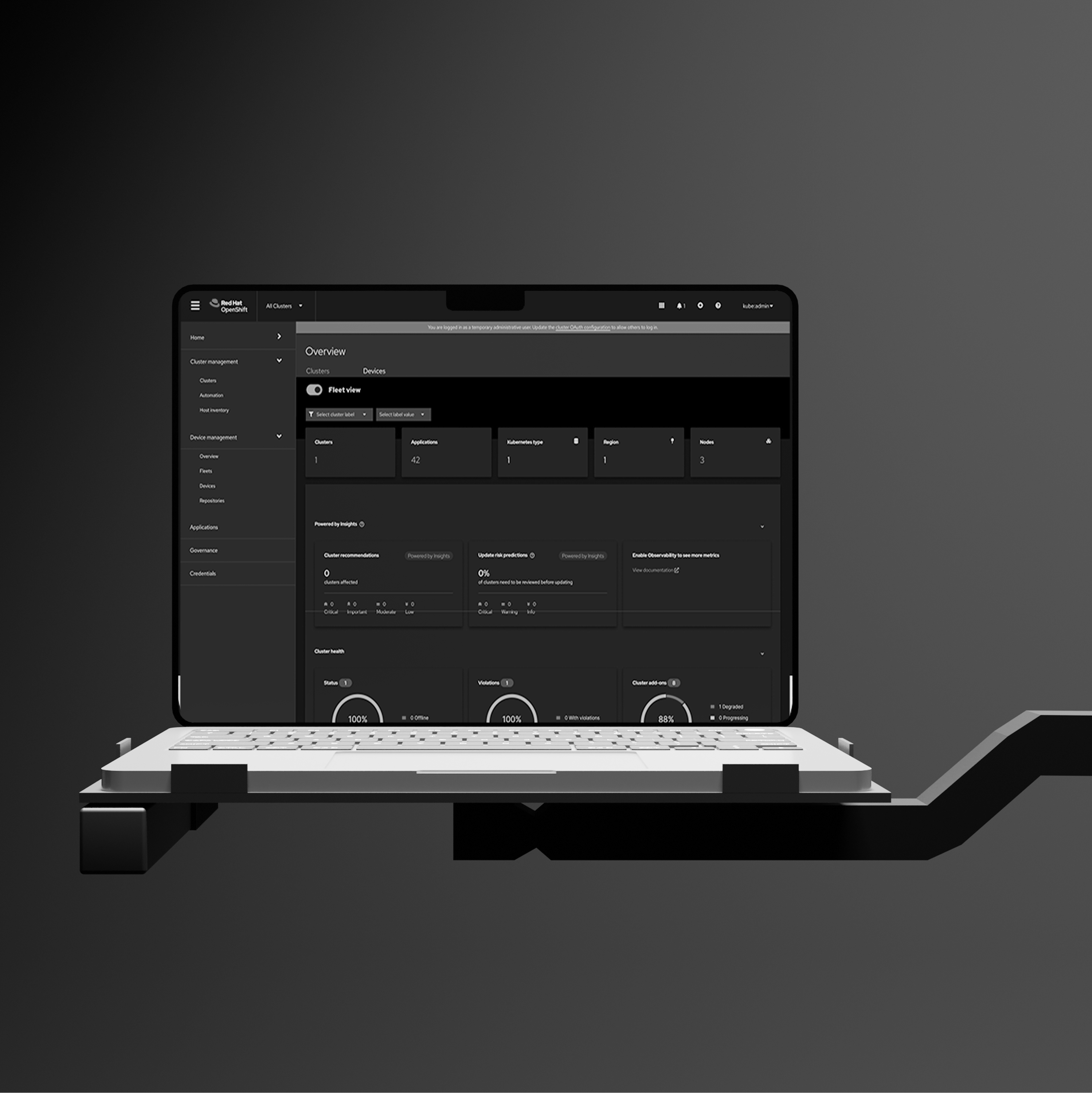
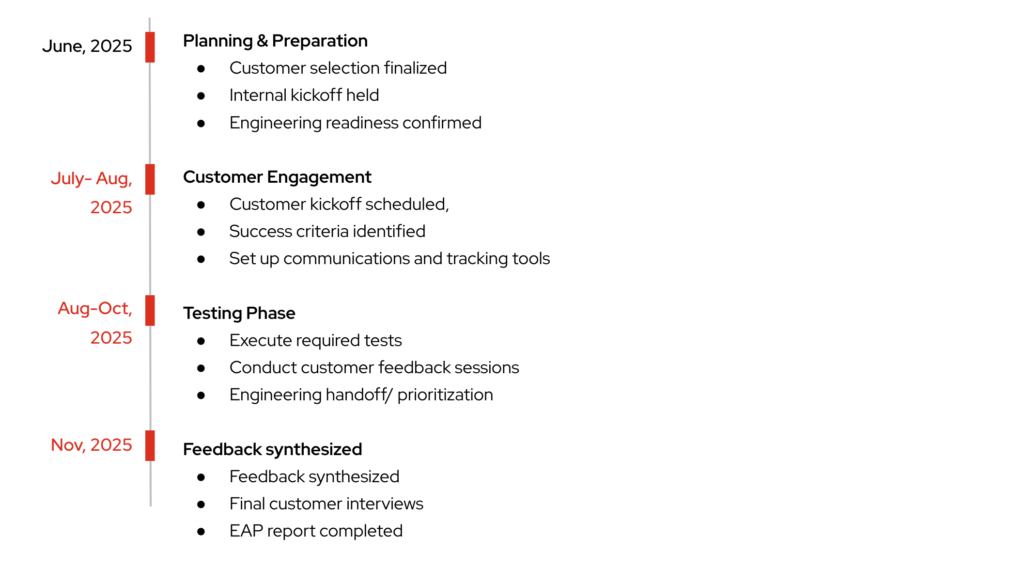
Problem: Red Hat had strong edge capabilities across OpenShift and Ansible, but they remained fragmented across infrastructure, automation, and application-management workflows, leaving customers in high-complexity environments without a cohesive way to monitor distributed systems, identify operational and security risks, and take action—while internal misalignment around customer priorities, launch scope, and delivery standards threatened momentum toward GA 1.0.
Solution: An agent-led edge management product that unified device, application, security, monitoring, and operational intelligence into a cohesive experience, helping system integrators, operators, and viewers understand system health, identify what required attention, and take appropriate action across distributed environments while establishing a phased foundation for future edge application-management capabilities.
My Role & Impact: Established the UX architecture and experience strategy from early product ambiguity through GA 1.0, translating enterprise research into personas, jobs to be done, prioritized capabilities, and a phased roadmap while aligning product, engineering, business, research, and design around customer evidence and launch-critical decisions.
Improved cross-functional delivery efficiency by approximately 30% through AI-enabled prototyping, clearer design standards, and stronger handoff practices.
Established a market-ready experience foundation for Red Hat Edge Management GA 1.0.
Aligned technical capabilities with validated needs from Eli Lilly, ABB, Lockheed Martin, and other enterprise partners.
Created a scalable path for expansion across industrial, manufacturing, drone, marine, and distributed enterprise environments.
STRATEGY
Reframed the initiative from a technology-led combination of OpenShift and Ansible capabilities into a customer-centered edge product strategy by grounding decisions in enterprise research, aligning buyer and operator needs through personas and jobs to be done, separating GA-critical capabilities from future-state enhancements, and using AI-enabled prototyping to accelerate alignment, validate experience direction, and create a phased path to launch.
UX PROCESS
DISCOVERY
Discovery focused on understanding both the customer ecosystem and the internal operating model needed to deliver the product successfully.
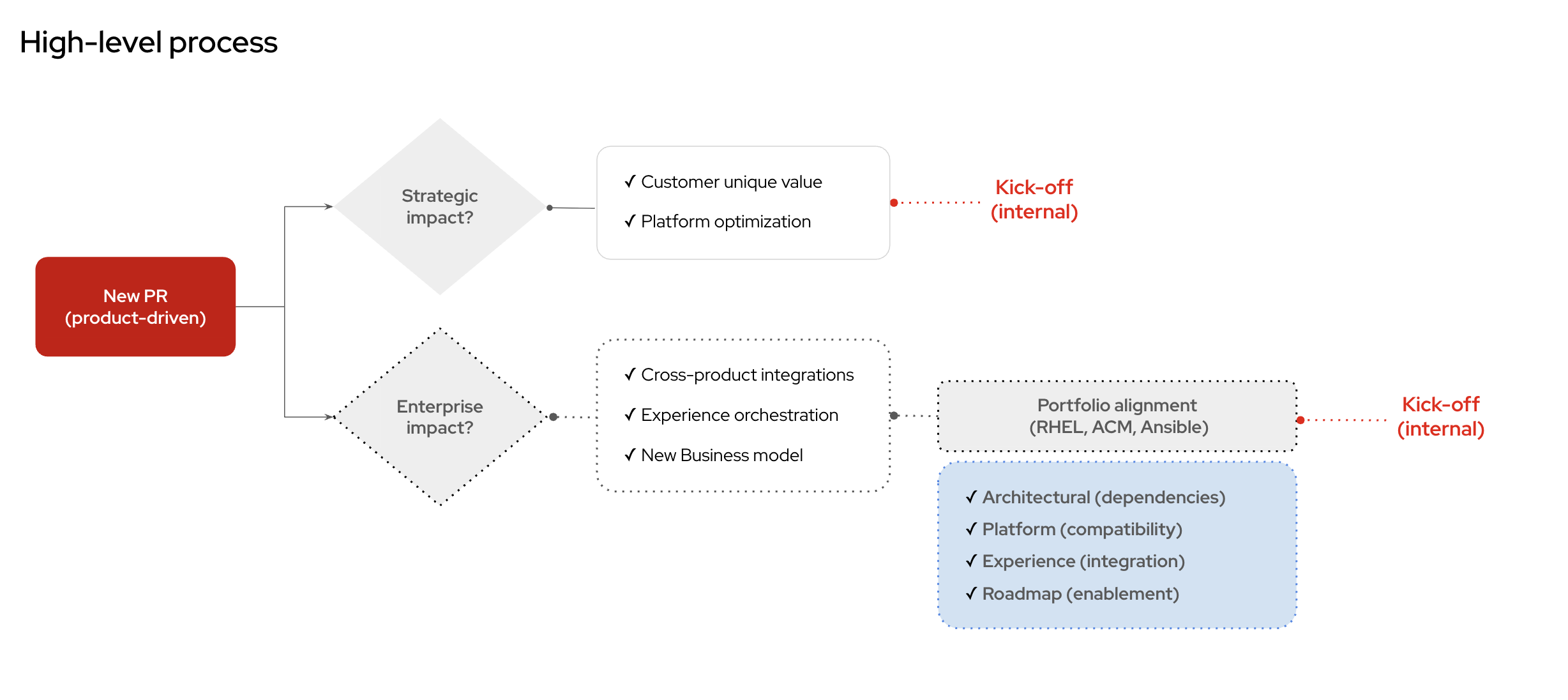
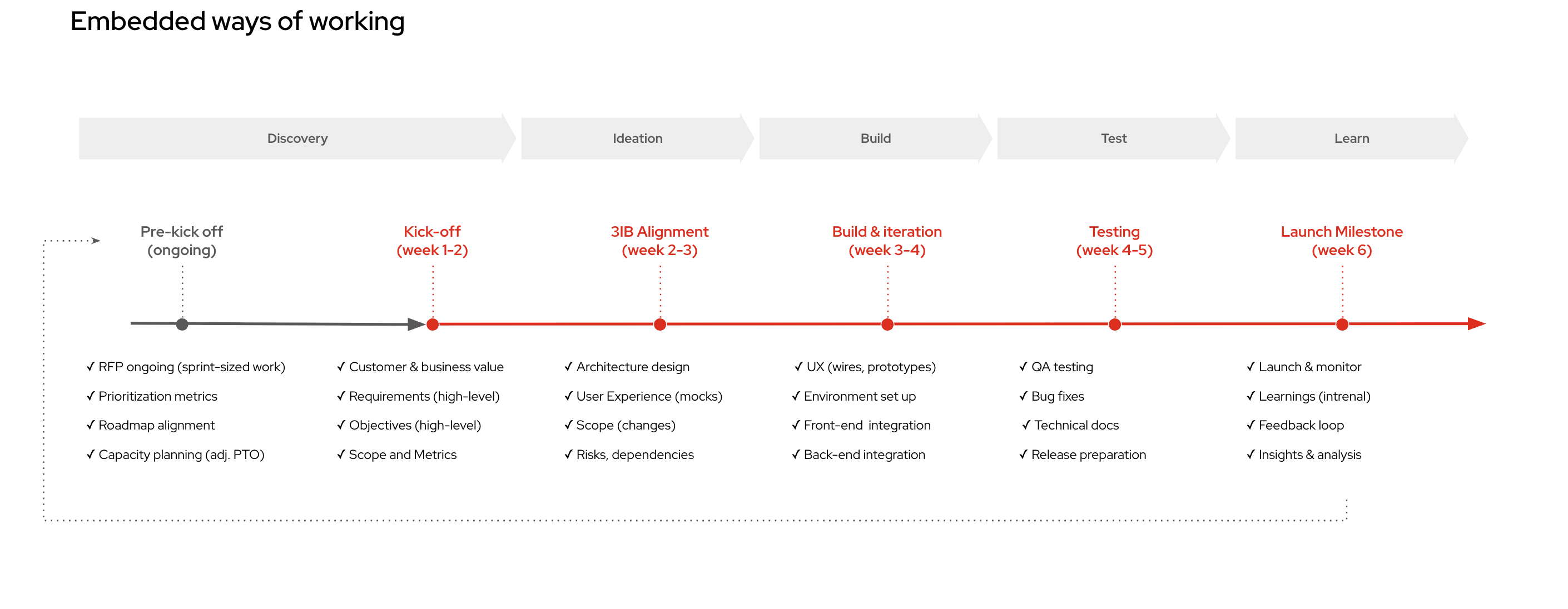
I evaluated customer needs, product strategy, team workflows, intake processes, and cross-functional handoffs to identify where friction was slowing clarity, consistency, and delivery. These insights helped shape a stronger future-state approach for how teams aligned, prioritized, and moved work forward.
This work also clarified the difference between buyers and daily users, which became foundational to our personas, jobs to be done, roadmap priorities, and overall experience strategy.
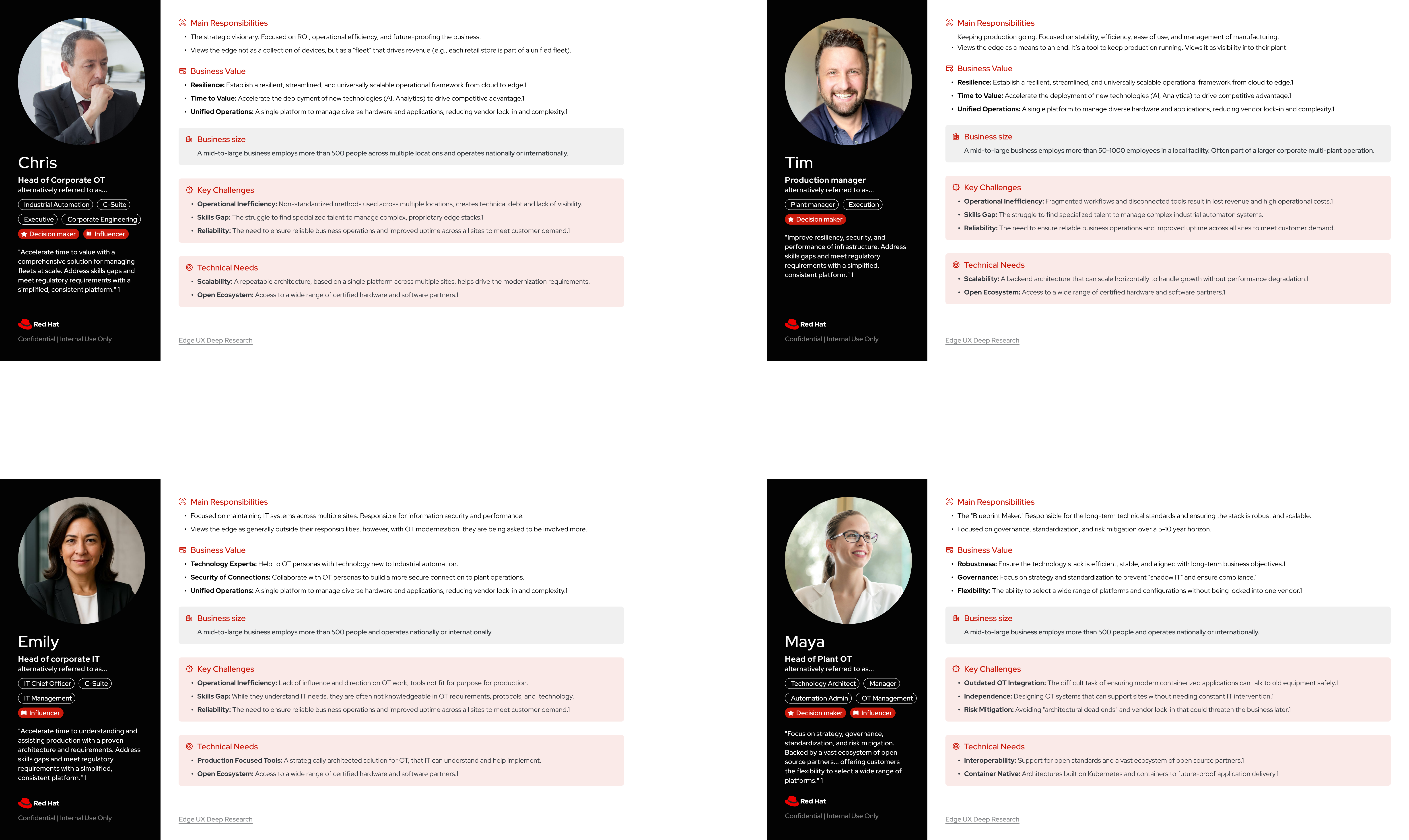
Through research and conversations with Eli Lilly, ABB, Lockheed Martin, and other interested partners, I identified two connected but distinct needs. Buyers were focused on business value: reducing cost, saving time, improving consistency, strengthening security visibility, and scaling operations across distributed environments. Users needed clarity in the daily experience: onboarding devices, monitoring health, identifying what needed attention, and acting quickly when edge devices required support.
I translated these insights into persona artifacts across four buyer stakeholder groups and three core user roles: Admin / System Integrator, Operator, and Viewer.
These artifacts gave product, engineering, business, and design teams a shared understanding of who we were serving. They also helped us define jobs to be done, prioritize must-have capabilities, and shape an incremental delivery model from GA launch toward future-state experience improvements.
DEFINE
I turned customer research and early discovery into a clear product structure that helped the team move from ambiguity to roadmap alignment.
I clarified the problem statement, mission, desired experience, scope, and incremental path forward. This gave product, engineering, business, and design teams a shared understanding of what we were solving, why it mattered, and how we would get there in phases.
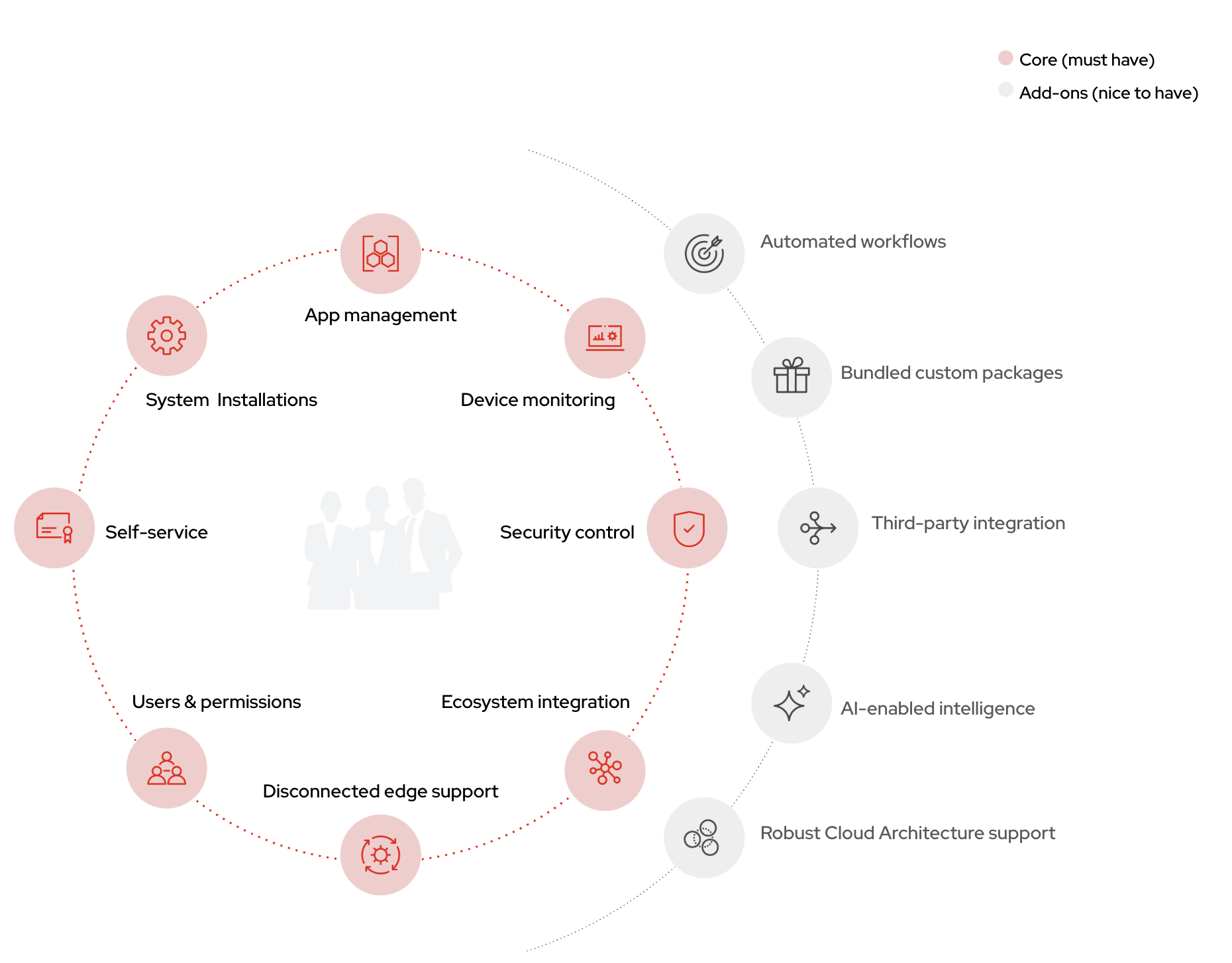
I created personas and jobs to be done to define who we were designing for and what outcomes mattered most. From there, I helped separate must-have capabilities from good-to-have enhancements, which aligned the experience scope with the product roadmap and reduced the risk of scattered feature delivery.
Through close partnership with product and engineering teams, I translated research insights into product themes, prioritized capabilities, and phased experience recommendations. This helped the team understand what needed to launch first for GA 1.0, what could evolve next, and how each release could move us closer to the desired future-state experience.
IDEATE
I encouraged my team to use AI as a way to accelerate alignment, make ideas visible earlier, and move with more confidence.
I role-modeled this by implementing AI-enabled workflows myself first. I used AI to generate low-fidelity wireframes, compare design directions, clarify requirements, and translate abstract product goals into tangible experience options. This helped the team see how AI could support better thinking, not replace design judgment.
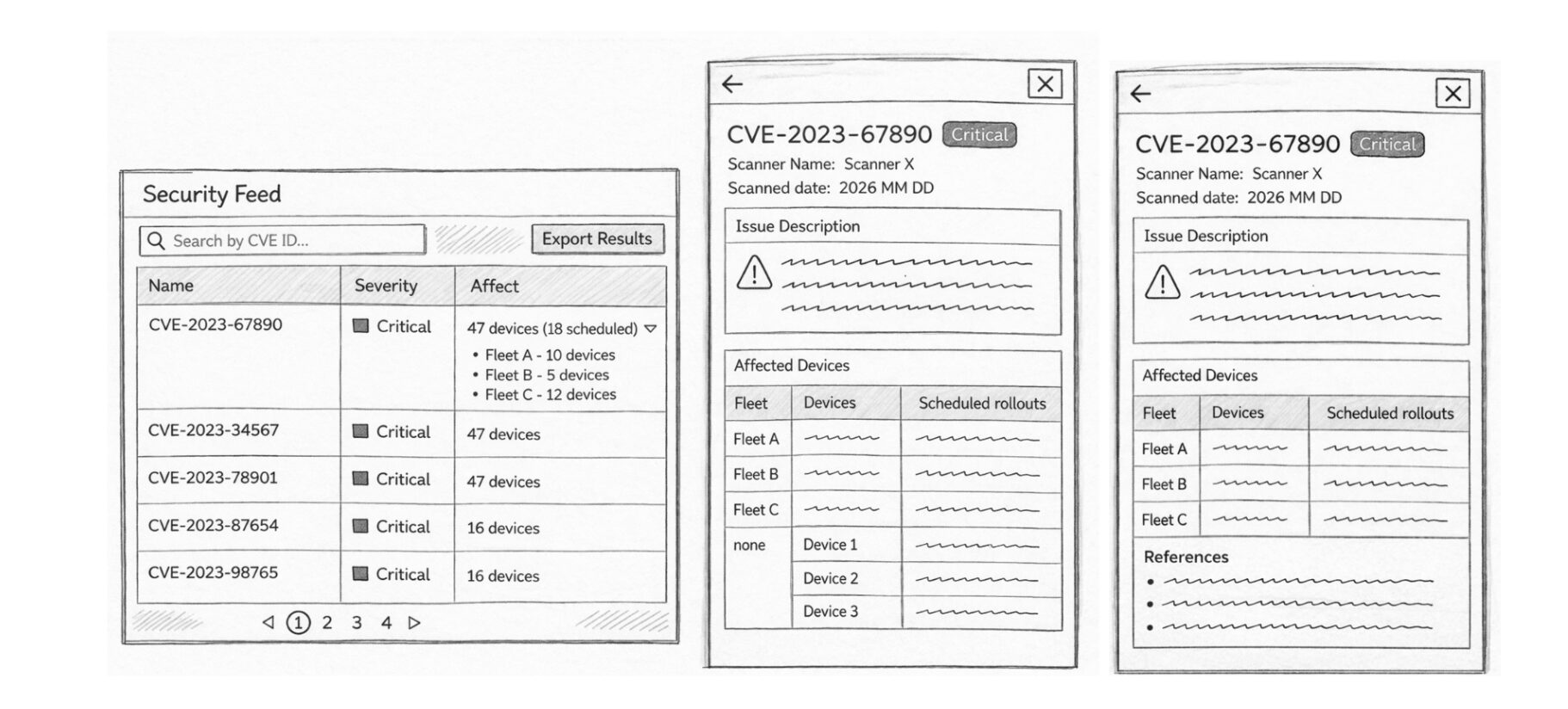
Low-fidelity wireframes became a critical alignment tool. They helped product, engineering, business, and design teams align around the mission, priority capabilities, visibility needs, and phased delivery path before moving into high-fidelity design.
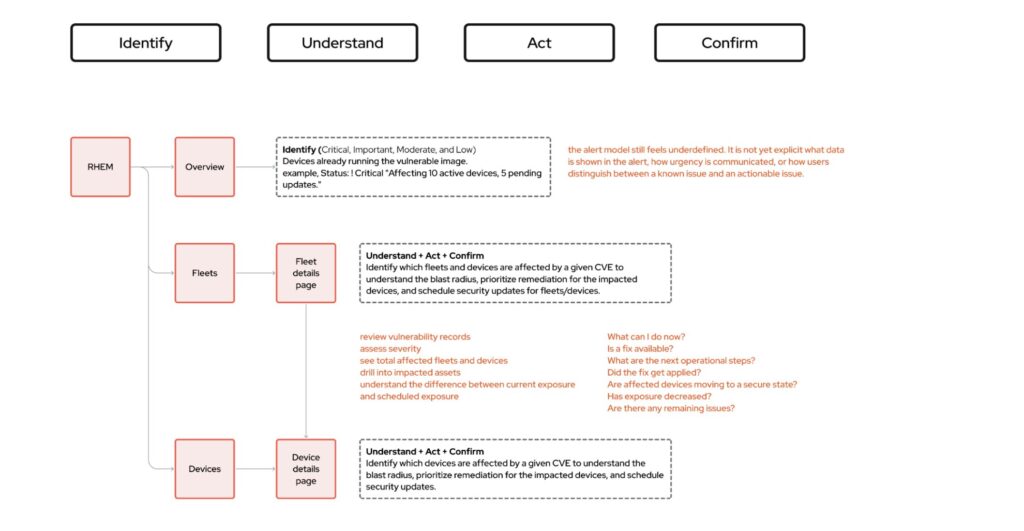
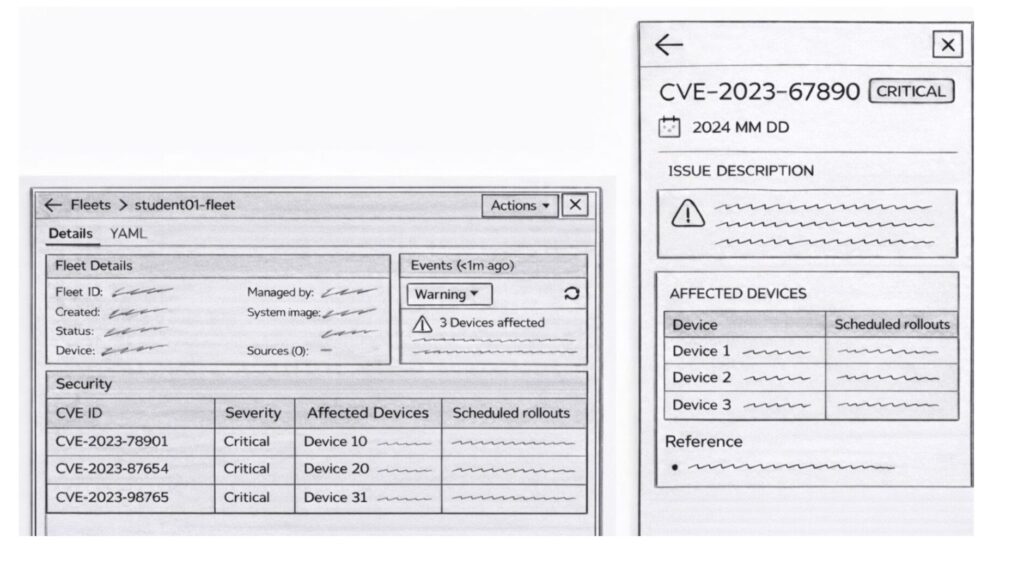
Then, I guided the team into deeper layers of the experience. One example was the vulnerability exposure experience. Early low-fidelity wires helped us clarify what users needed to understand today, what actions they needed to take, and how the experience could evolve over time.
The phased approach started by surfacing exposed and less secure images up front, enabling users to identify risk, take action, and compare those images against scheduled image updates and configuration changes. This helped the team connect the current release scope to a more complete future-state experience.
By leading through example and encouraging AI-assisted exploration, I helped the design team work faster, think more systematically, and build stronger partnerships across product and engineering. This positioned design as an innovative and strategic partner, not only a delivery function.
EXECUTE
I helped establish a stronger design delivery model while staying hands-on where the pace and capacity required it.
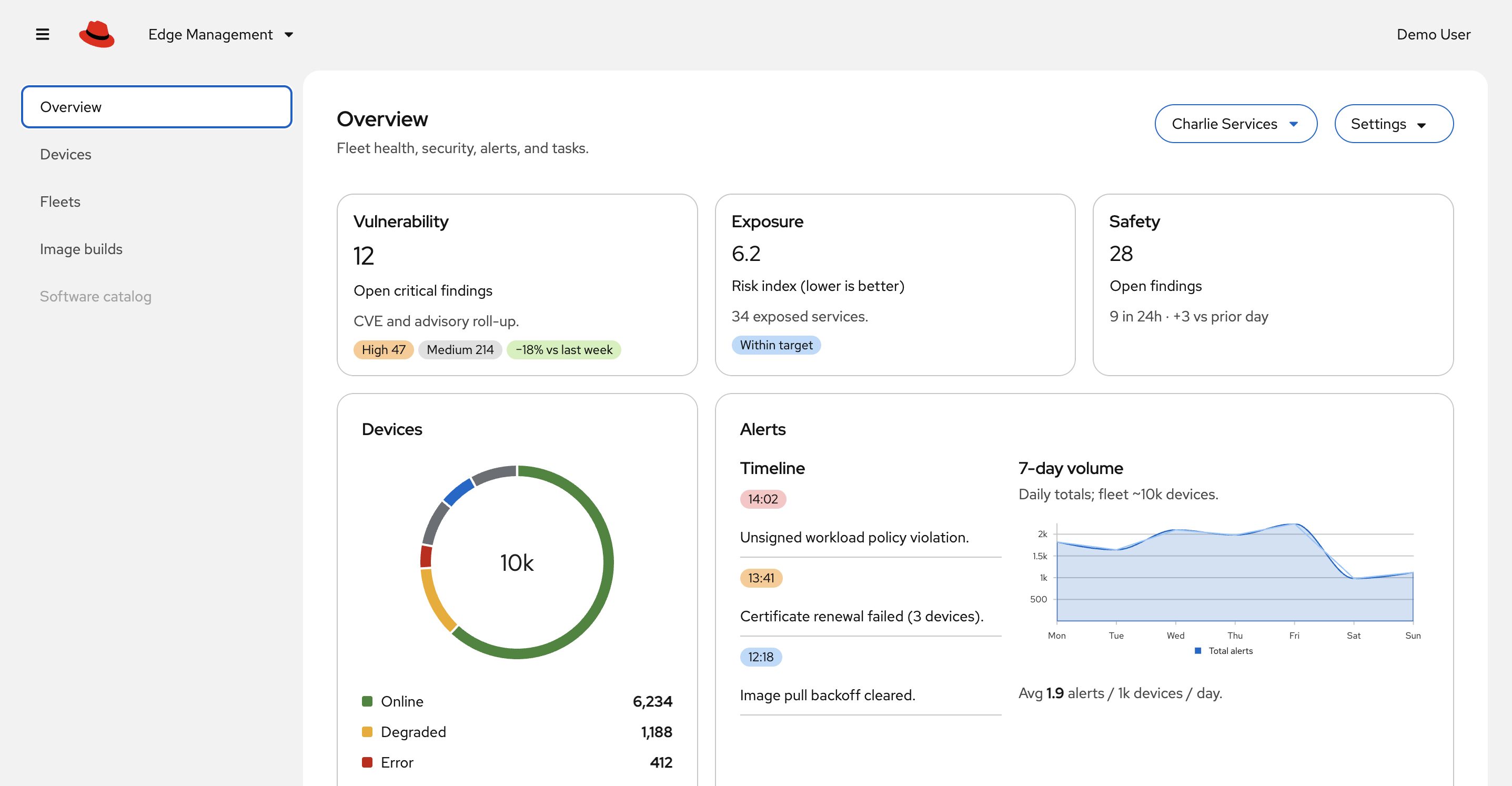
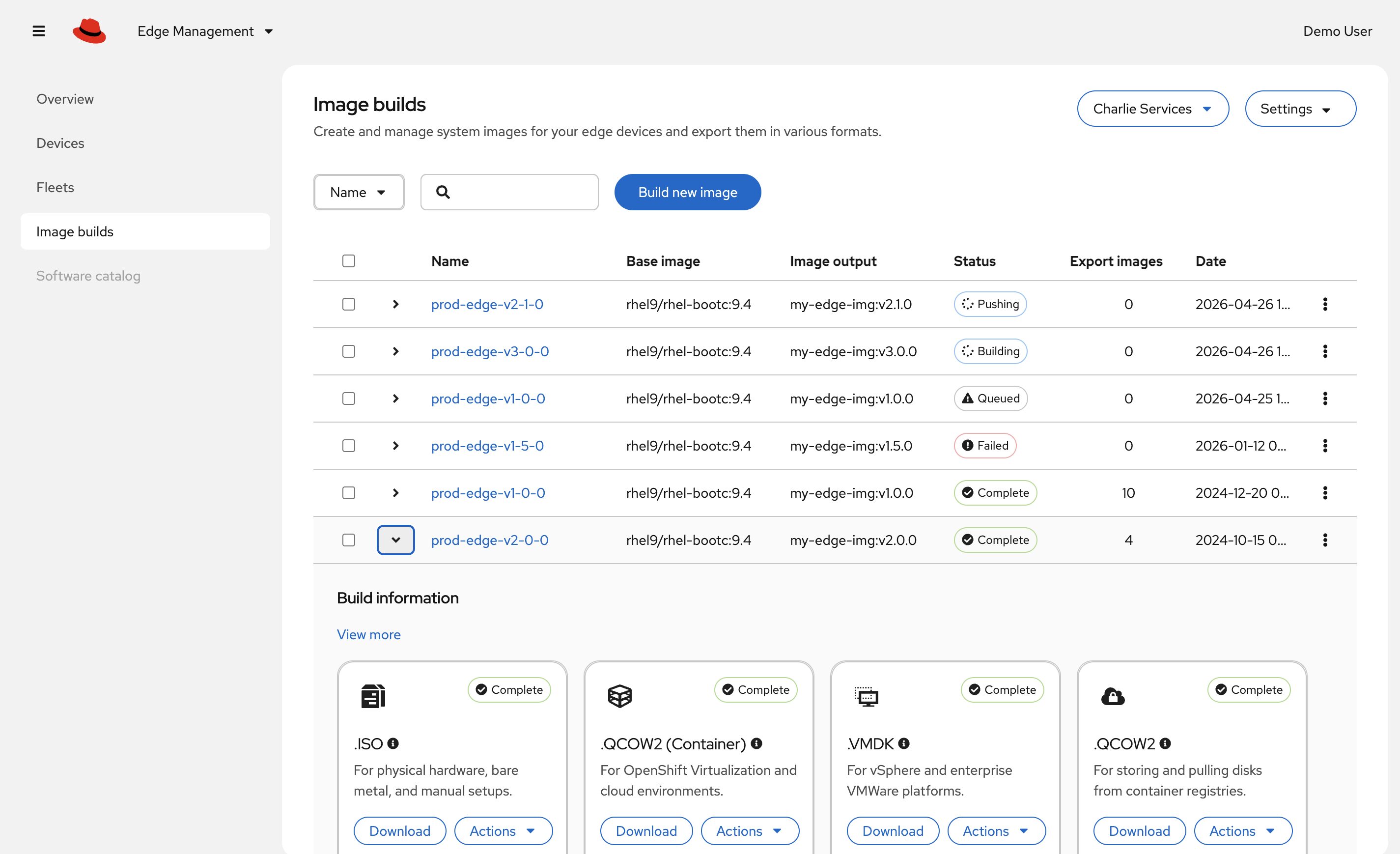
As UX Architect, my role was not to own the development process end to end, but to guide how the experience moved from concept to product alignment and development readiness. I role-modeled the use of low-fidelity wires, AI-enabled prototypes to show the team how to create alignment earlier and reduce ambiguity before moving into high-fidelity design.
I introduced practical best practices for when and how to use each artifact:
Low-fidelity wires to align on structure, scope, and user flow.
AI-enabled prototypes to explore interactions, component behavior, and experience variations faster.
High-fidelity designs to finalize content, accessibility, visual polish, and design system alignment.
Dev-ready handoff to document final decisions, approvals, and implementation details in Jira.
This approach created a clearer path from idea to product sign-off to development readiness. It improved visibility for product and engineering partners, helped designers stay focused on the right level of fidelity at the right time, and improved delivery efficiency by approximately 30%.
Note: The full AI-enabled prototype is available in GitLab and can be accessed here.