


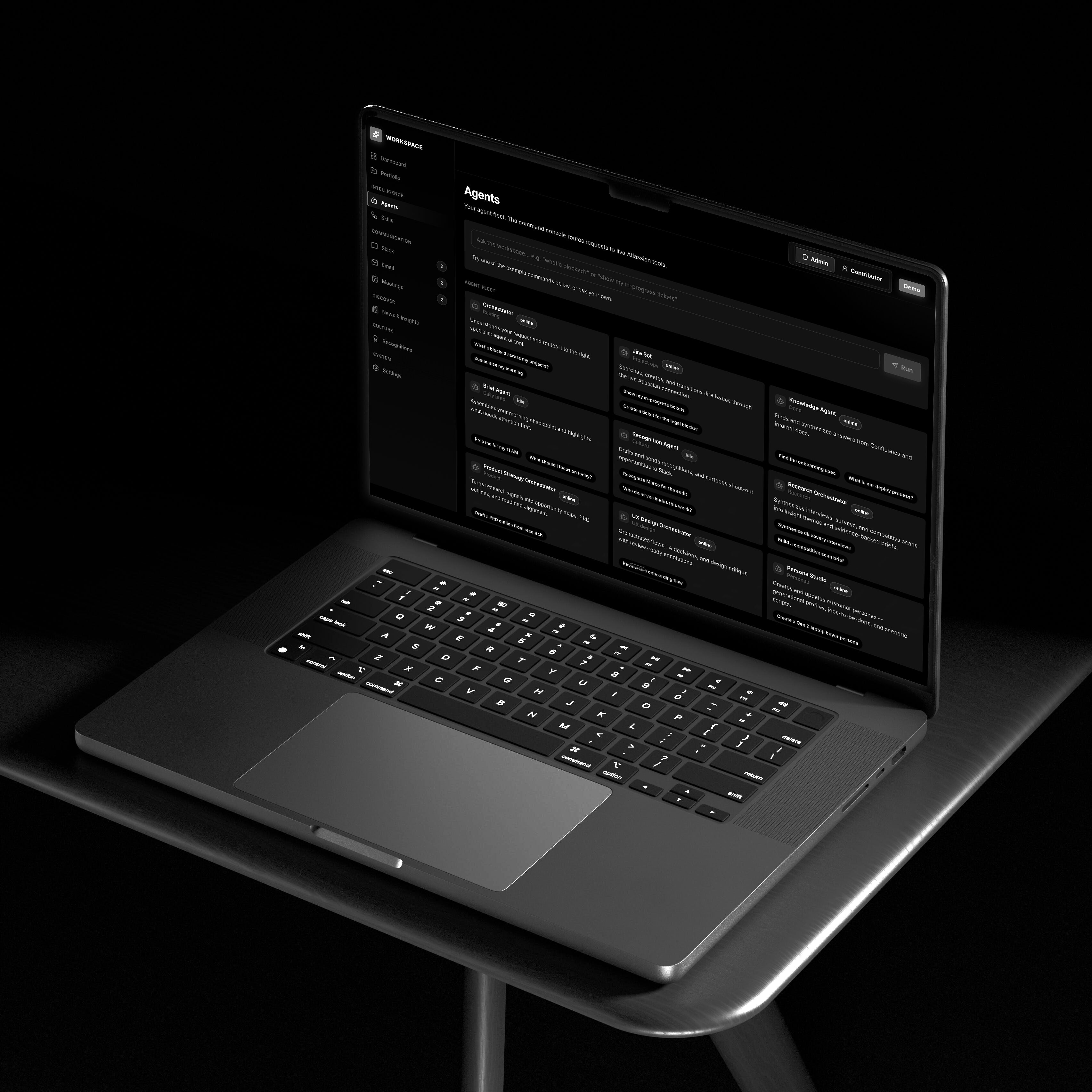
Agentic AI Workflow Orchestration

Overview
Problem: 80% of UXD teams struggled to adopt AI consistently and confidently, while fragmented tools and manual workflows consumed hours across research synthesis, Jira planning, stakeholder communication, design production, and prototyping; slowing delivery, limiting visibility, and making it difficult to scale AI without compromising quality, accessibility, or accountability.
Solution: A human-in-the-lead agentic design operations model that connected research, Slack, email, calendars, Jira, Figma, and GitLab through MCP servers, specialized AI subagents, and chained workflow commands, transforming fragmented inputs into synthesized priorities, structured work, accelerated design outputs, and functional prototypes while preserving human judgment and final decision-making.
My Role & Impact: Led the experience strategy, agentic workflow architecture, and 30/60/90-day adoption model, transforming fragmented AI experimentation into repeatable, human-led workflows and aligning design, product, engineering, and quality partners around a scalable approach to AI adoption.
- Reached 80% team adoption within six months.
- Increased operational efficiency and AI engagement by 30%.
- Reduced Jira epic and ticket setup from 1–2 hours to 10–15 minutes.
- Compressed daily synthesis from hours to minutes and design development from days to hours.
- Shortened concept-to-prototype cycles from weeks to days.
Strategy
I approached this work as both an operational design problem and a cultural opportunity. as this work was experimental, a major part of the value came from testing, learning, and sharing what worked. I joined the tiger team environment not just to build solutions, but to demonstrate new possibilities for design and product teams.
PROCESS
DISCOVERY
Through survey feedback, internal interviews, and ongoing engagement with design and engineering teams, we found that 80% of internal teams were struggling to adopt AI consistently, confidently, and at scale. While research showed strong awareness of AI’s potential, many teams remained uncertain about where to begin, which workflows to prioritize, and how to integrate AI into their day-to-day work.
The challenge was not a lack of interest. Designers were already experimenting with AI, but adoption was fragmented, and many remained cautious about how deeply it should influence the design process. The organization needed a clearer operating model, practical guidance, and shared standards that would help teams use AI effectively without compromising human judgment, accessibility, trust, or design quality.
Define
We defined the core problem, identified the foundational steps required for responsible AI adoption, and shaped a human-in-the-lead, AI-in-action framework to help teams apply AI with clarity, accountability, and confidence across design workflows.
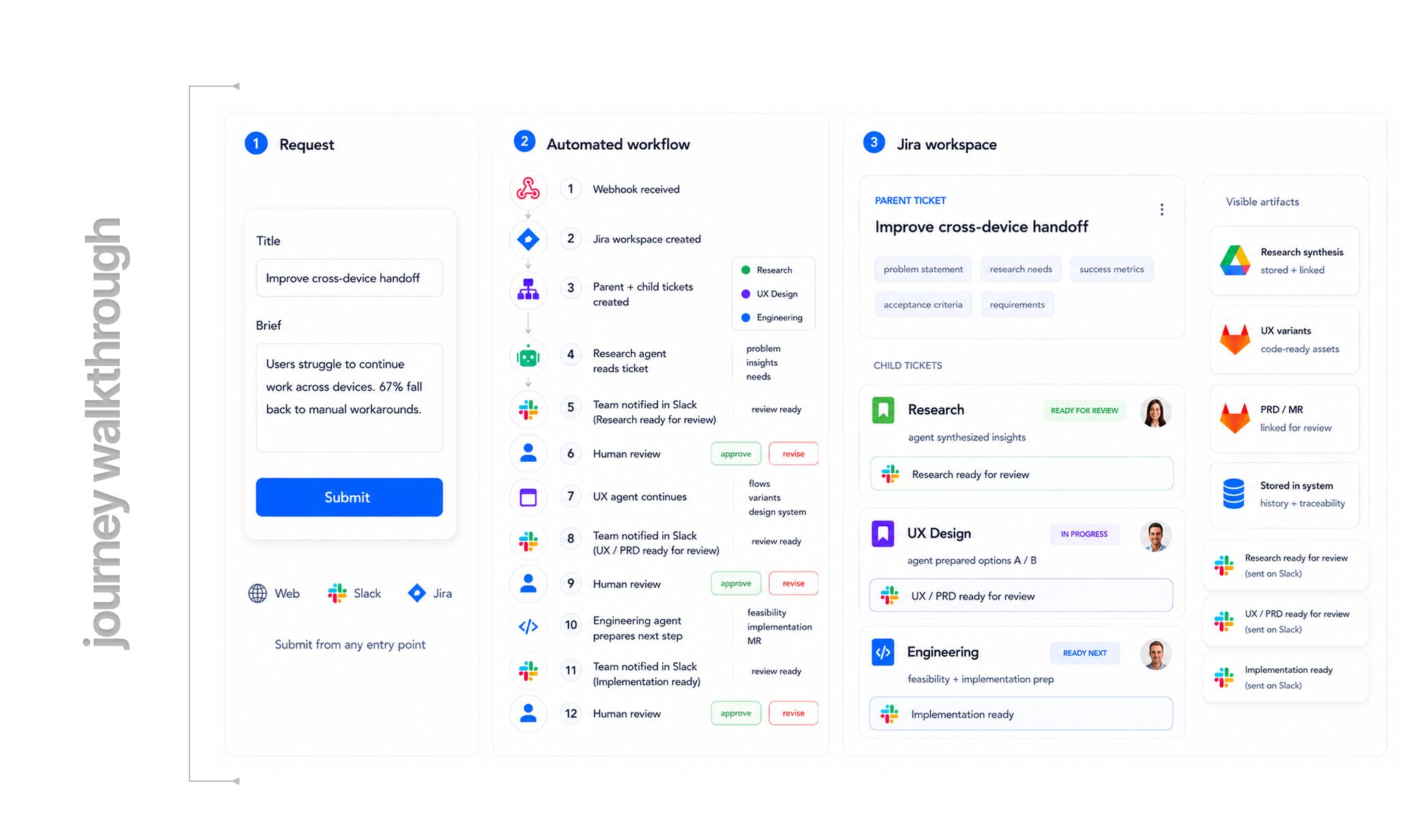
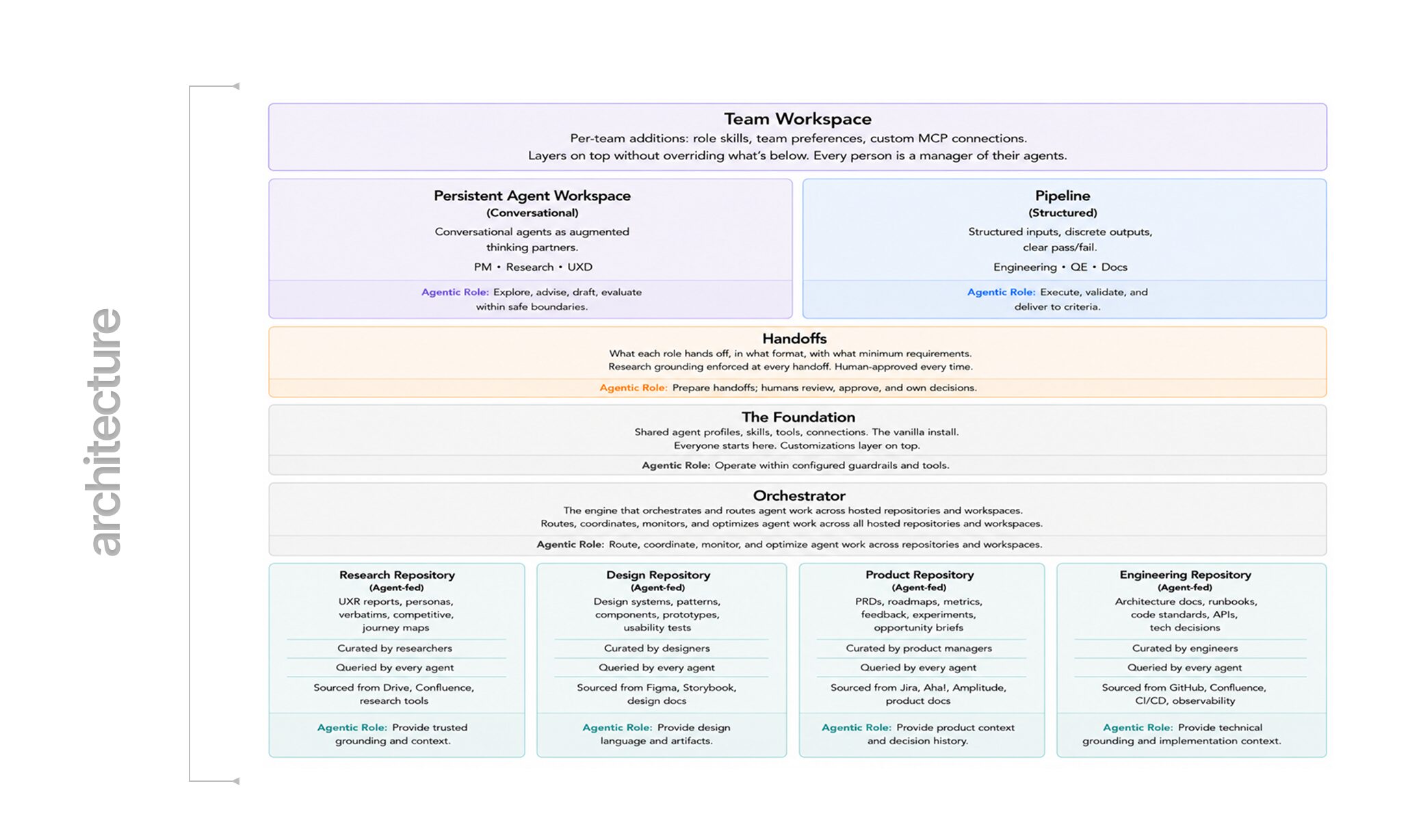
The framework turns fragmented requests into a structured operating model where AI helps collect signals, surface patterns, suggest experience directions, and accelerate handoffs, while humans remain responsible for verification, judgment, decision-making, and final quality.
Core components included:
- MCP servers for tool coordination and shared workflow context
- RAG agents that brought research insights to life
- Cursor and Ask for synthesis, planning, and task generation
- Jira for automated epic and ticket creation
- Slack, email, calendar events, and relevant news for daily summaries and priority signals
- Figma plugins for faster low- to high-fidelity wireframing and design-system outputs
- GitLab for rapid prototyping and tighter design–engineering collaboration
- Momentum for tracking progress, reviewing outcomes, and measuring impact
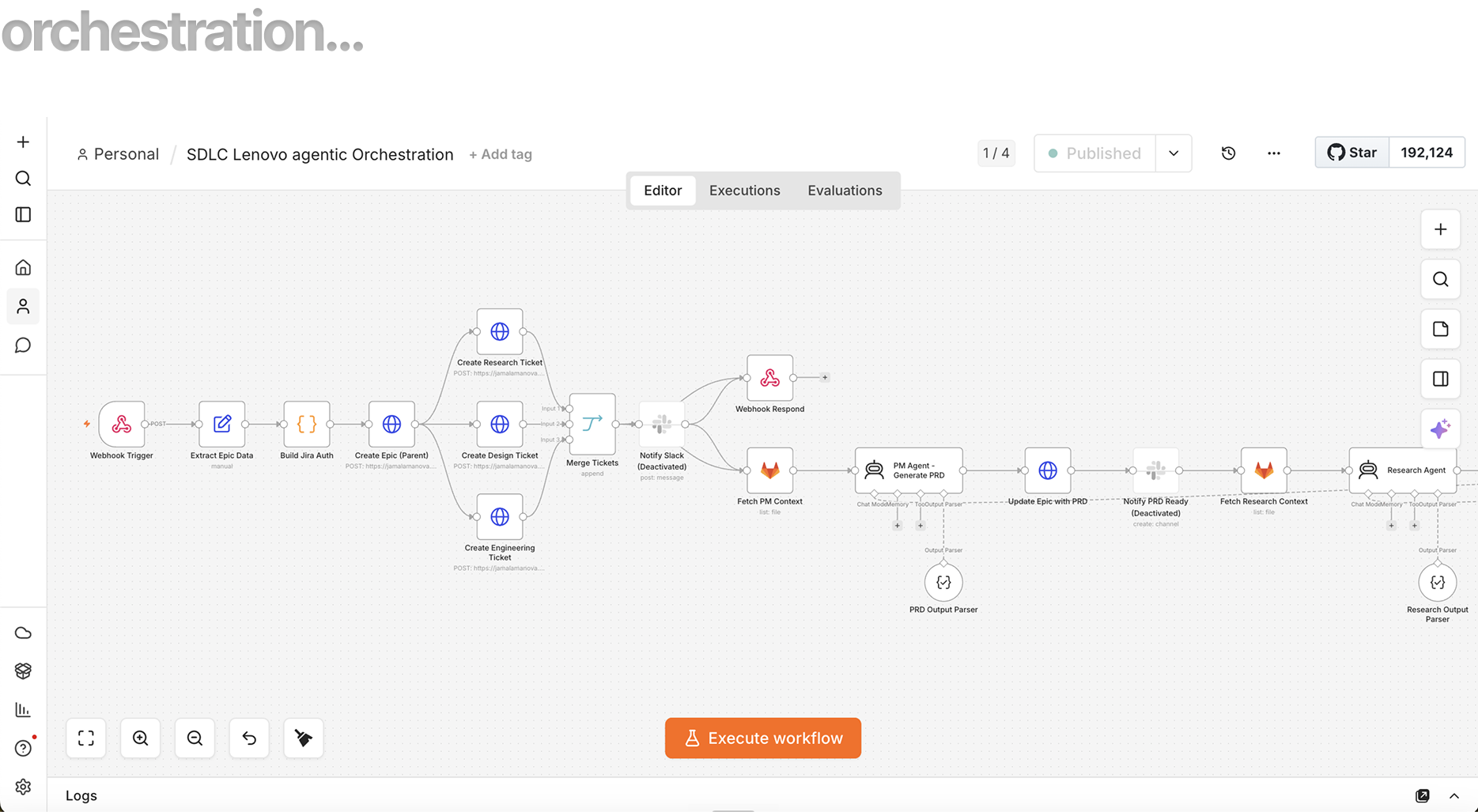
TESTING & SOCIALIZATION
Before adoption, we tested the system through research-based personas, A/B testing, and real workflow scenarios. Research acted as the spine, helping teams validate decisions and improve the experience before scaling.
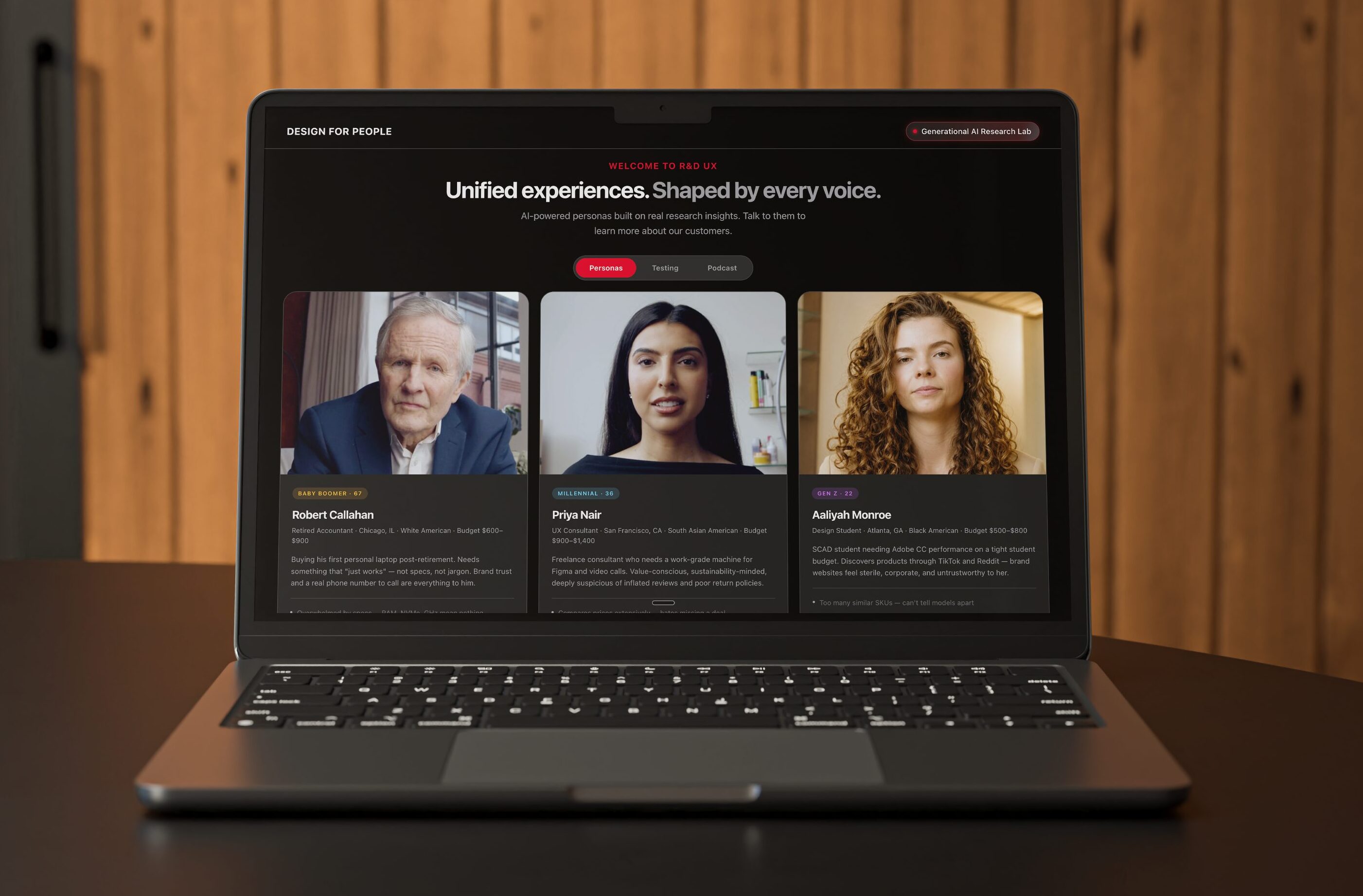
Weekly podcasts, demos, and working sessions kept stakeholders engaged, made the learning visible, and positioned the Intelligent Workspace as the central hub for operations, communication, effectiveness tracking, and experimentation.
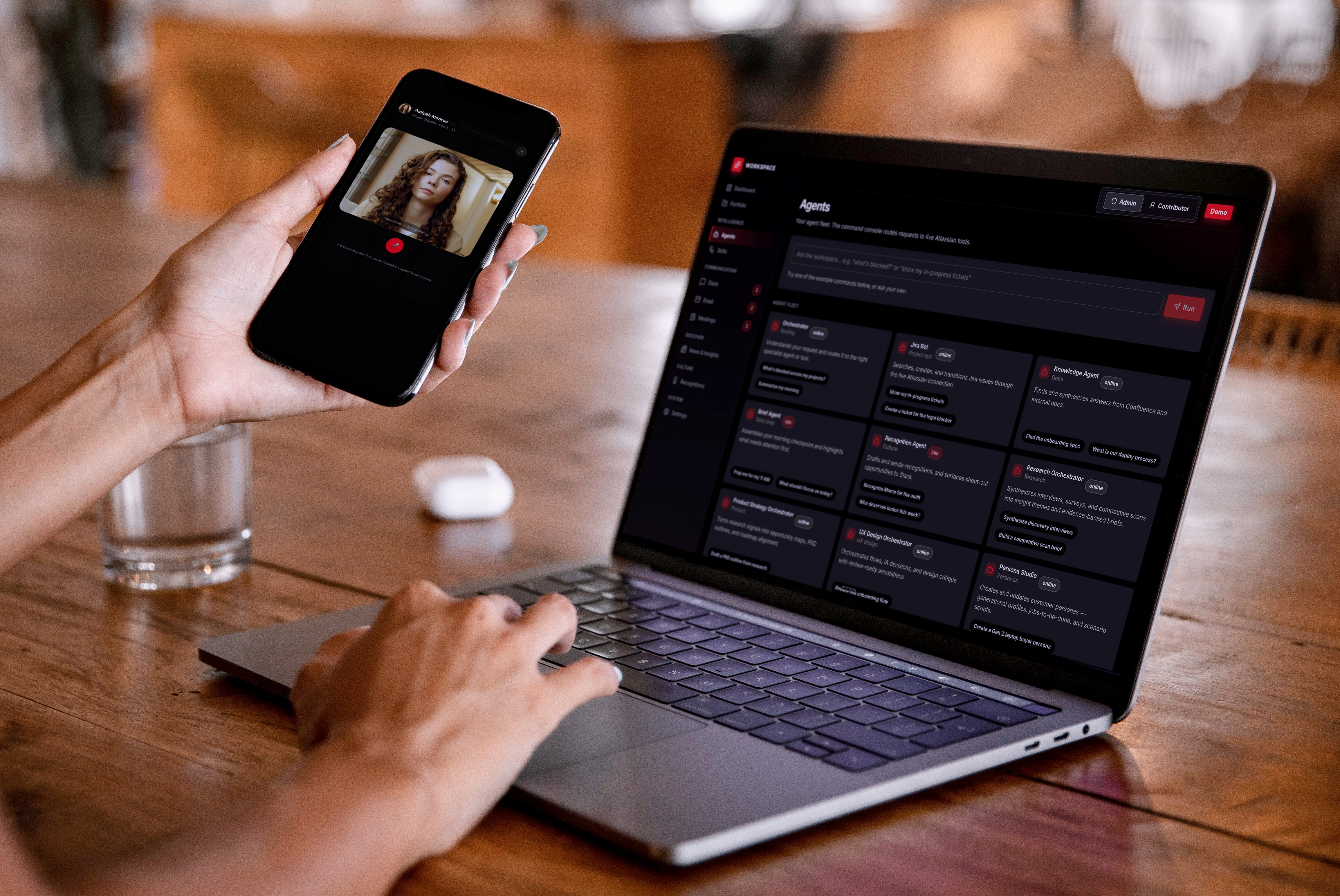
ADOPTION
This phase was treated as a structured enablement effort rather than an informal rollout.
Step-by-step integrations, MCP server access, dedicated Slack channels, and centralized Confluence documentation gave teams clear ways to learn, ask questions, share experiments, and refine their workflows. This created stronger visibility into how the system worked and lowered the barrier to experimentation across the team.
It also helped shift behavior from waiting for direction to taking action, learning in public, and improving through shared practice. That cultural shift was as important as the tooling itself, because it encouraged teams to engage with AI as an active part of their workflow rather than as a separate experiment.
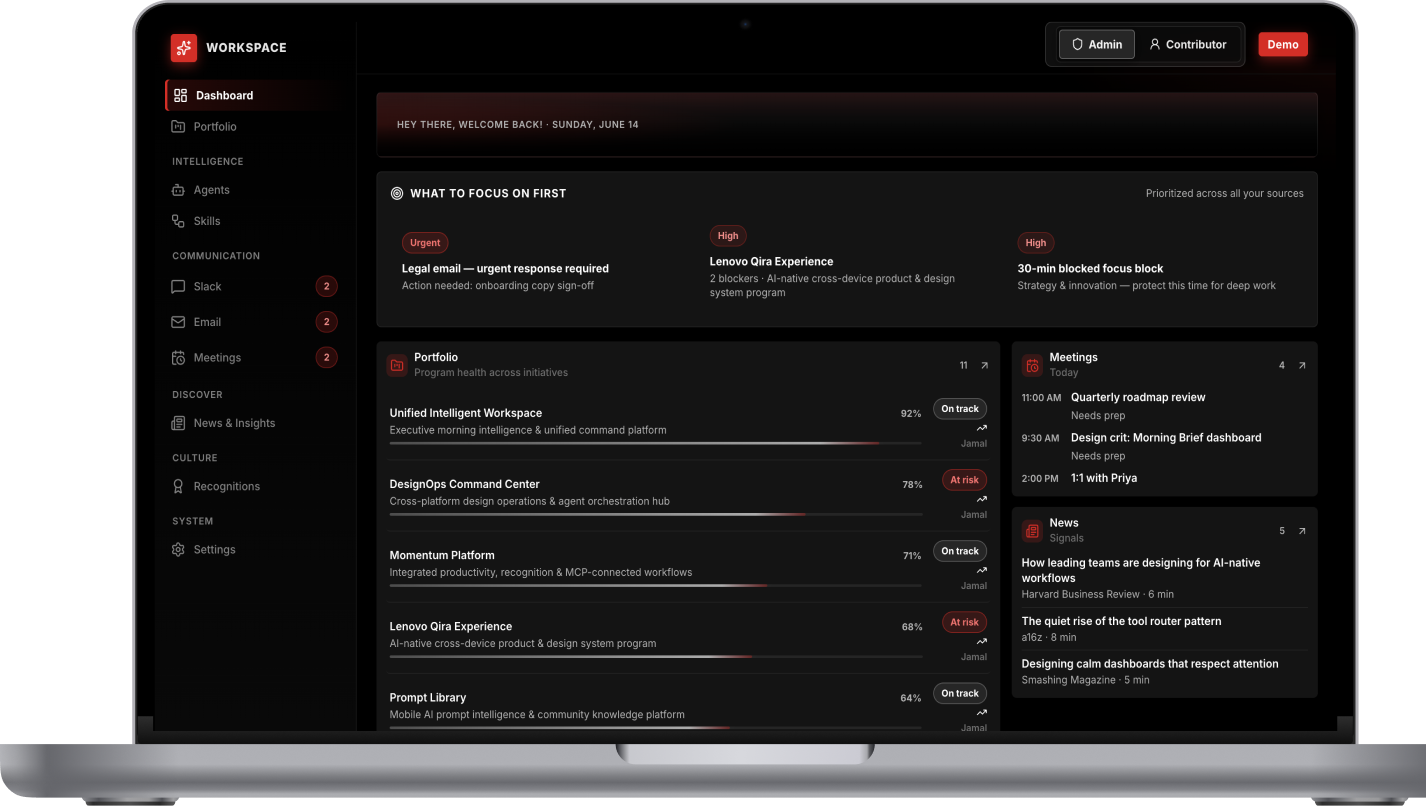
Within design teams, each designer had a personalized interface tailored to their workflow, helping them track progress, communicate faster, and centralize platforms for all communications and initiatives.
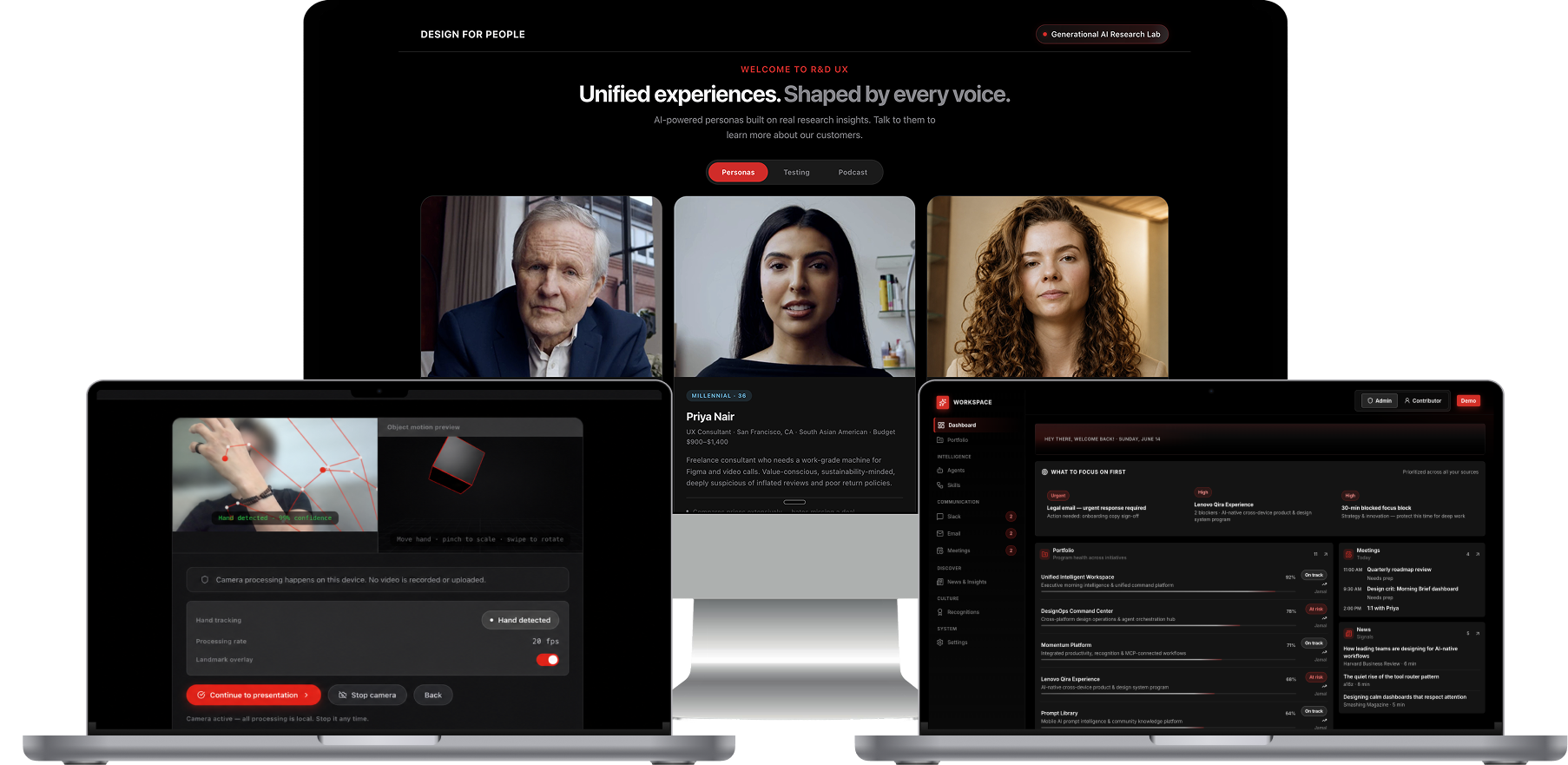
The Intelligent Workspace system enabled UXD teams to:
- Centralize the research insights to build an interactive workplace
- Automated Jira epics and tickets from meeting inputs and discussions
- Summarized daily communication and surfaced what mattered most
- Turned fragmented conversations into structured action
- Accelerated wireframe creation and reusable design system patterns
- Shortened the path from design concept to simulated prototypes
More broadly, it showed how agentic AI could support both team operations and design execution when applied with clear intent and workflow structure.
Impact
The initiative delivered measurable improvements in both efficiency and execution speed:
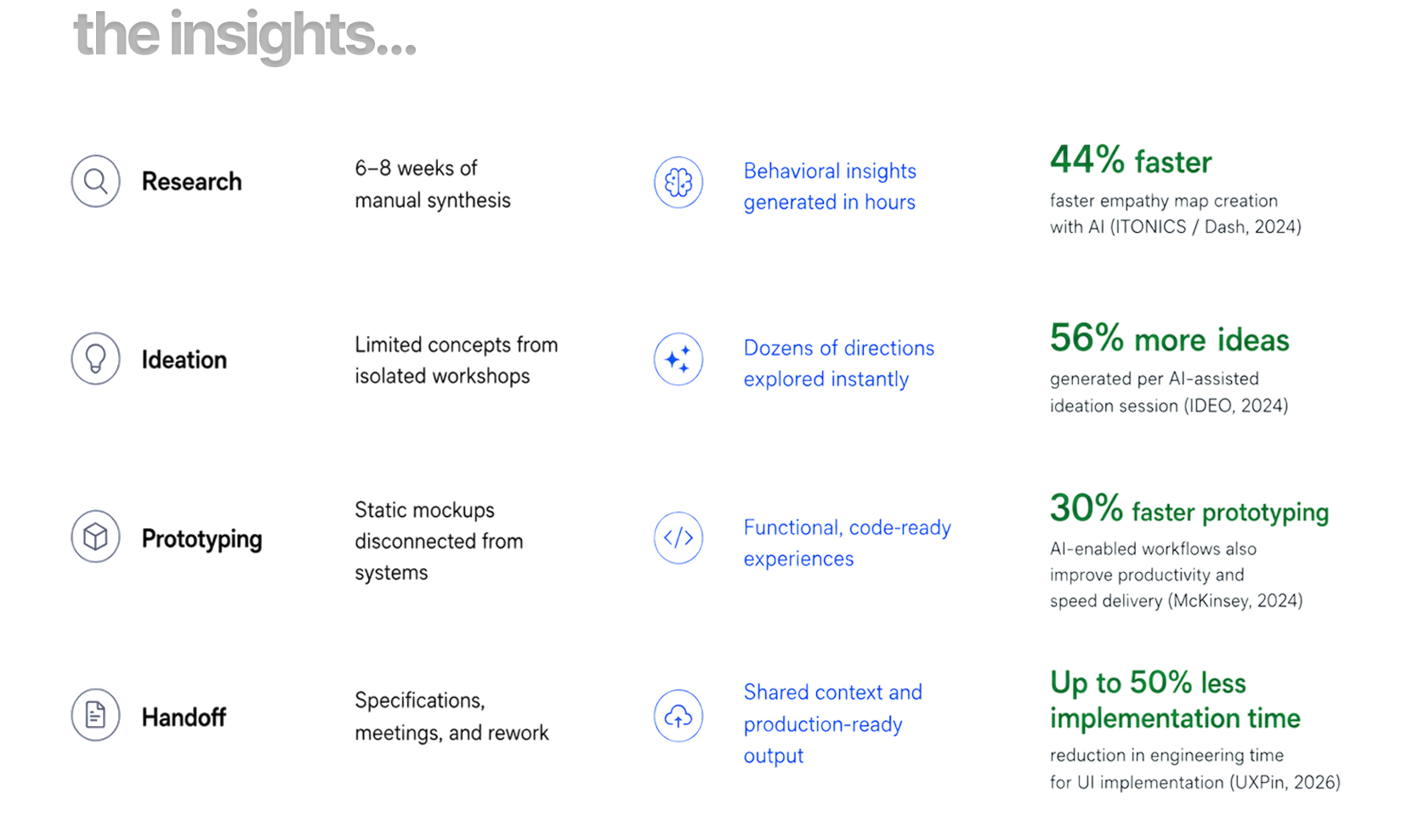
- 30% increase in operational efficiency through AI-driven workflow orchestration
- Jira epic and ticket setup reduced from 1–2 hours to 10–15 minutes
- daily synthesis across Slack, email, calendar activity, and news reduced from hours to minutes
- low-fidelity to higher-fidelity design workflows accelerated from days to hours
- concept-to-prototype cycles shortened from weeks to days through tighter Figma and GitLab integration
Beyond the measurable gains, the work also created momentum around experimentation and practical adoption. It showed how agentic AI could be applied in a repeatable and team-centered way to improve operations, strengthen execution, and support broader organizational learning.
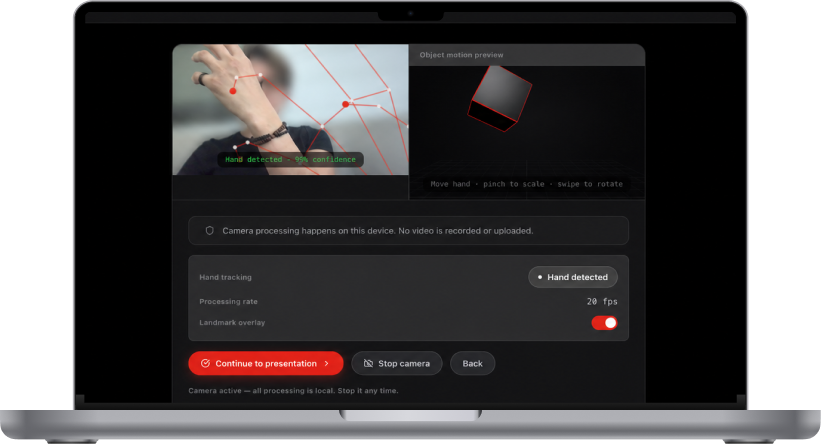
A meaningful outcome was how the team approached transparency. Several designers began introducing “co-authored by AI” disclosures in Jira tickets and generated content to make AI involvement visible to stakeholders. Instead of positioning AI as an author, the team standardized on “AI-assisted” attribution, paired with a brief explanation of how AI contributed (e.g., synthesis, structuring, or generation). This aligned with industry guidance that maintains human ownership while ensuring transparency and accountability.