



GM Fleet Data & APIs
OVERVIEW
Problem: GM API and Data partners faced complex onboarding, outdated integration guidance, slow support, and limited visibility into API and data-service activity, making it difficult to adopt, manage, and scale services with confidence while increasing operational strain for internal support teams.
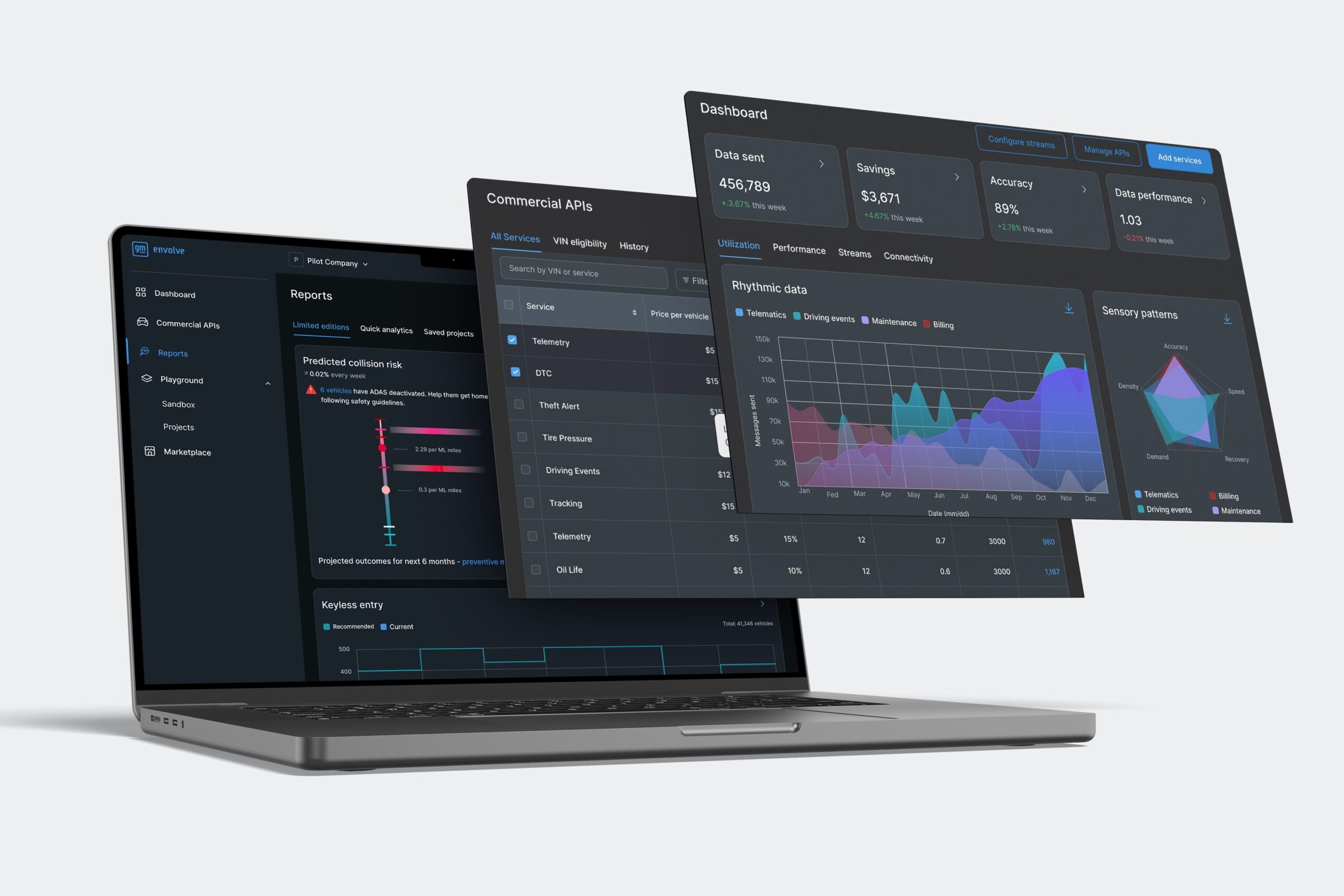
Solution: A unified partner platform that connected API onboarding, service management, data visibility, documentation, and Salesforce-powered case support into one end-to-end experience, giving partners clearer guidance and self-service control while helping internal agents track requests and resolve issues more efficiently.
My Role & Impact: Led the experience strategy and design of GM’s first end-to-end digital platform for API and Data services, translating partner needs, competitive research, business objectives, and technical constraints into a scalable service model while aligning product, engineering, business, Salesforce, and subject-matter experts around the future-state experience.
- Earned alignment and support from key fleet line-of-business teams.
- Validated strong partner demand, including 95% for dynamic help and 99% for the converged experience direction.
- Integrated case management directly into the product ecosystem, improving visibility and creating a clearer path to faster issue resolution.
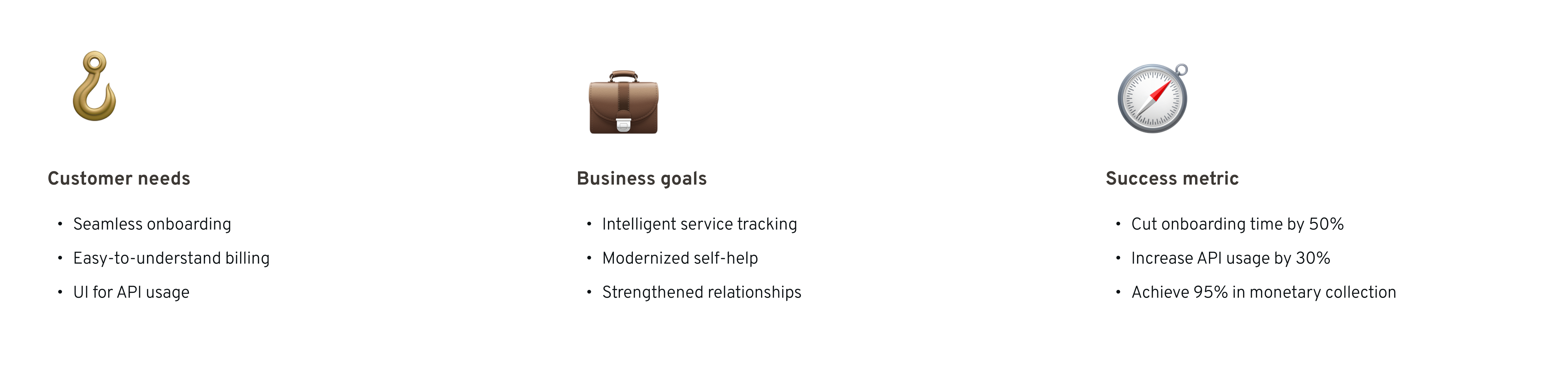
- Established a scalable foundation designed to reduce partner onboarding time by 50% and improve collections by 95%.
- Positioned the experience to support GM’s $100M+ API and Data services revenue goal by 2027.
UX PROCESS
Discovery
- Competitive Analysis – I analyzed top developer platforms, including Tesla Developer, Amazon Developers, and Apple Developer, to identify opportunities and draw inspiration.
- SME-Centered Research – I worked closely with Subject Matter Experts (SMEs) to gain deep insights into user needs and pain points, ensuring my design strategy was informed by expert perspectives.
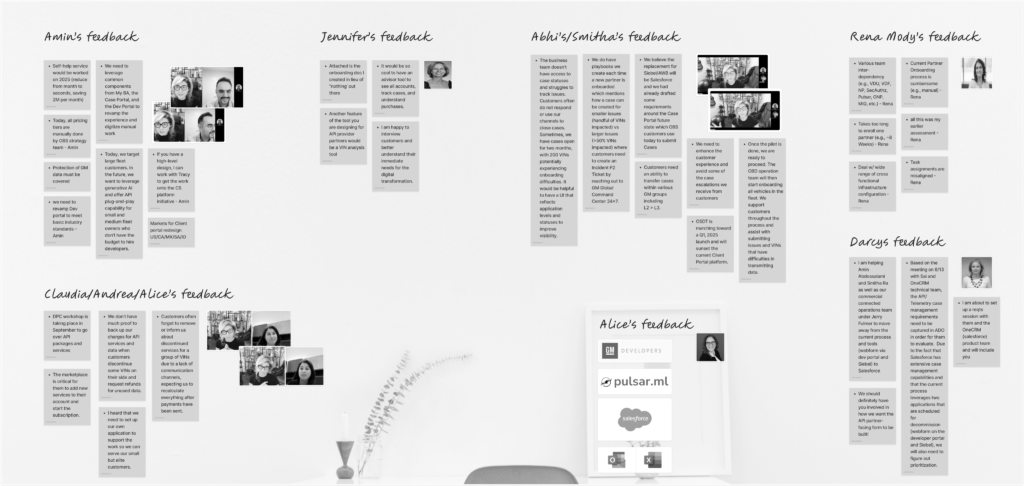
I collaborated with other partners from business, engineers, and product teams to conduct sessions focused on understanding key desired goals.
Define
As I mapped the ecosystem, I identified case management as a critical enabler. That led me to explore Salesforce Lightning integrations more deeply as part of the experience strategy. Rather than treating support as a separate downstream function, I integrated it into the product experience and ensured the solution aligned with Salesforce capabilities, GM Envolve branding, and OnStar’s broader digital transformation goals.
Value-driven partner success framework

The example below highlights a journey slice for client requests.

Ideate & test
I led multiple rounds of ideation and refinement across interaction patterns, labels, content structure, and support touchpoints.
This phase focused on testing how the experience could become:
- easier to understand
- more efficient to use
- more supportive across partner and agent needs
- scalable across future service capabilities
Partner interviews helped guide the direction. Users responded positively to the simplicity of the interactions, the clearer task flow, and the overall ease of use. Internal agents also saw value in quicker tracking and faster issue resolution.
Concept I – Dynamic help (95% demand)
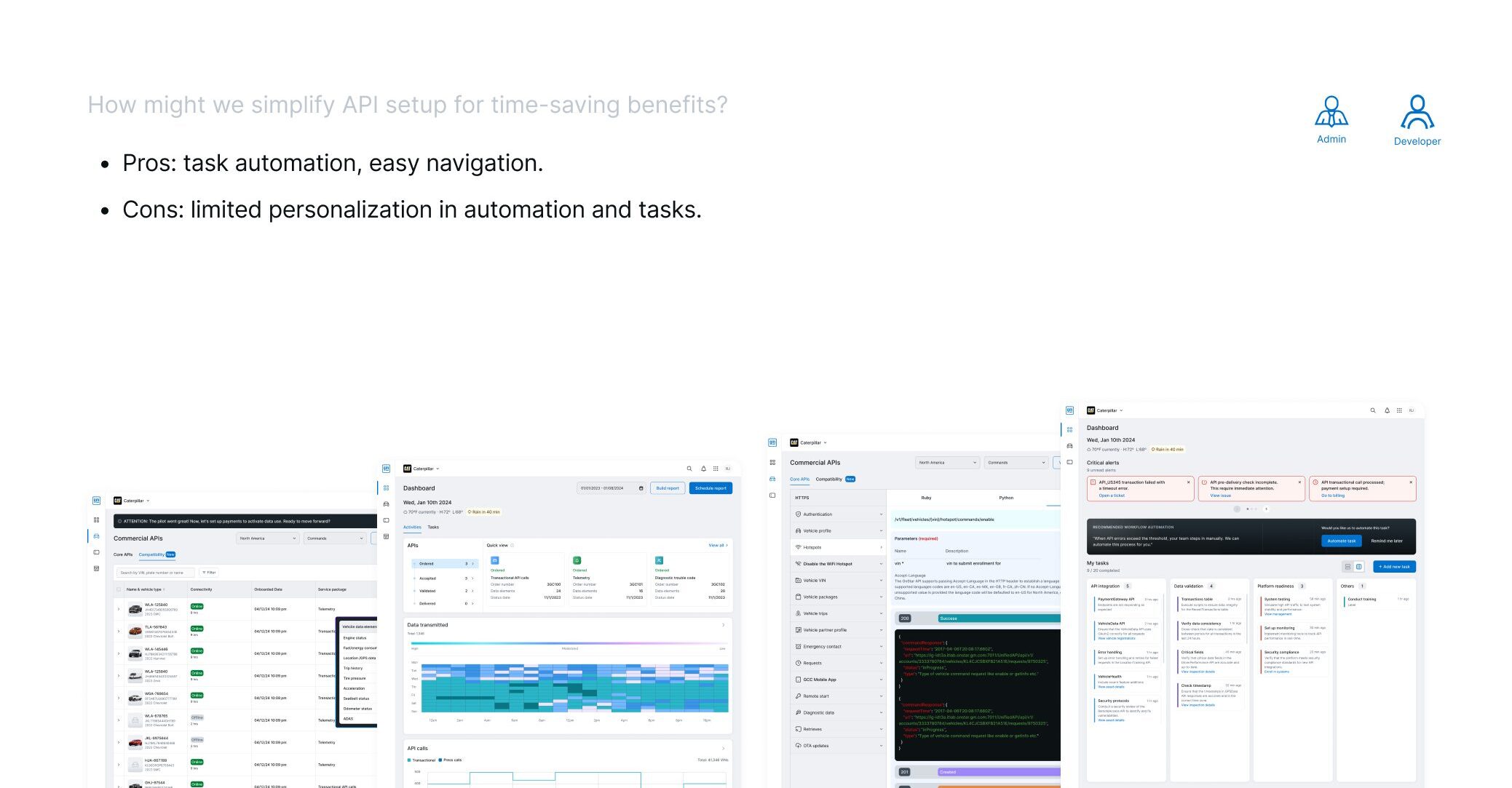

Concept II – Attracting outstanding (98% demand)
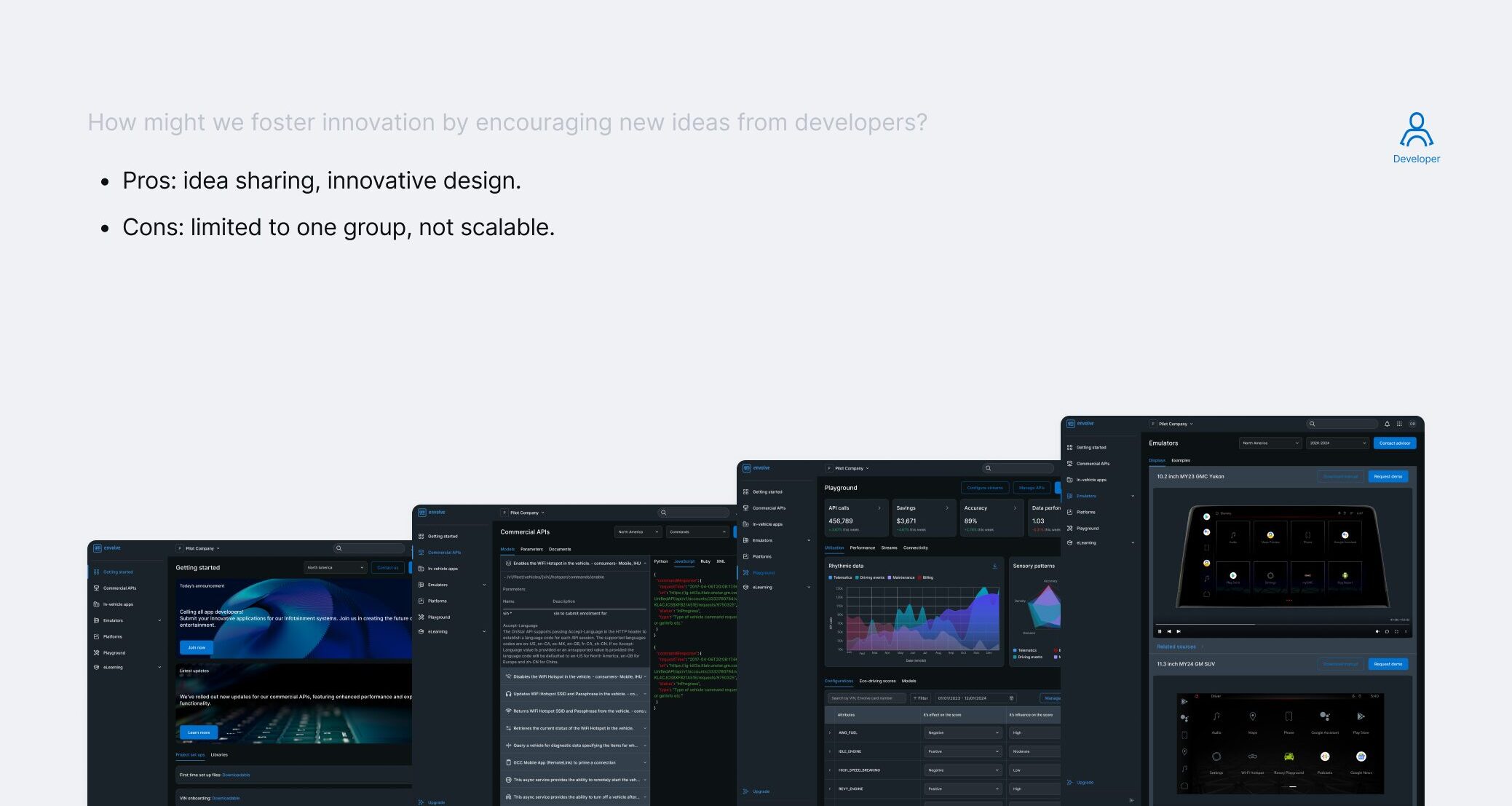
Converged designs (99% demand)
Build
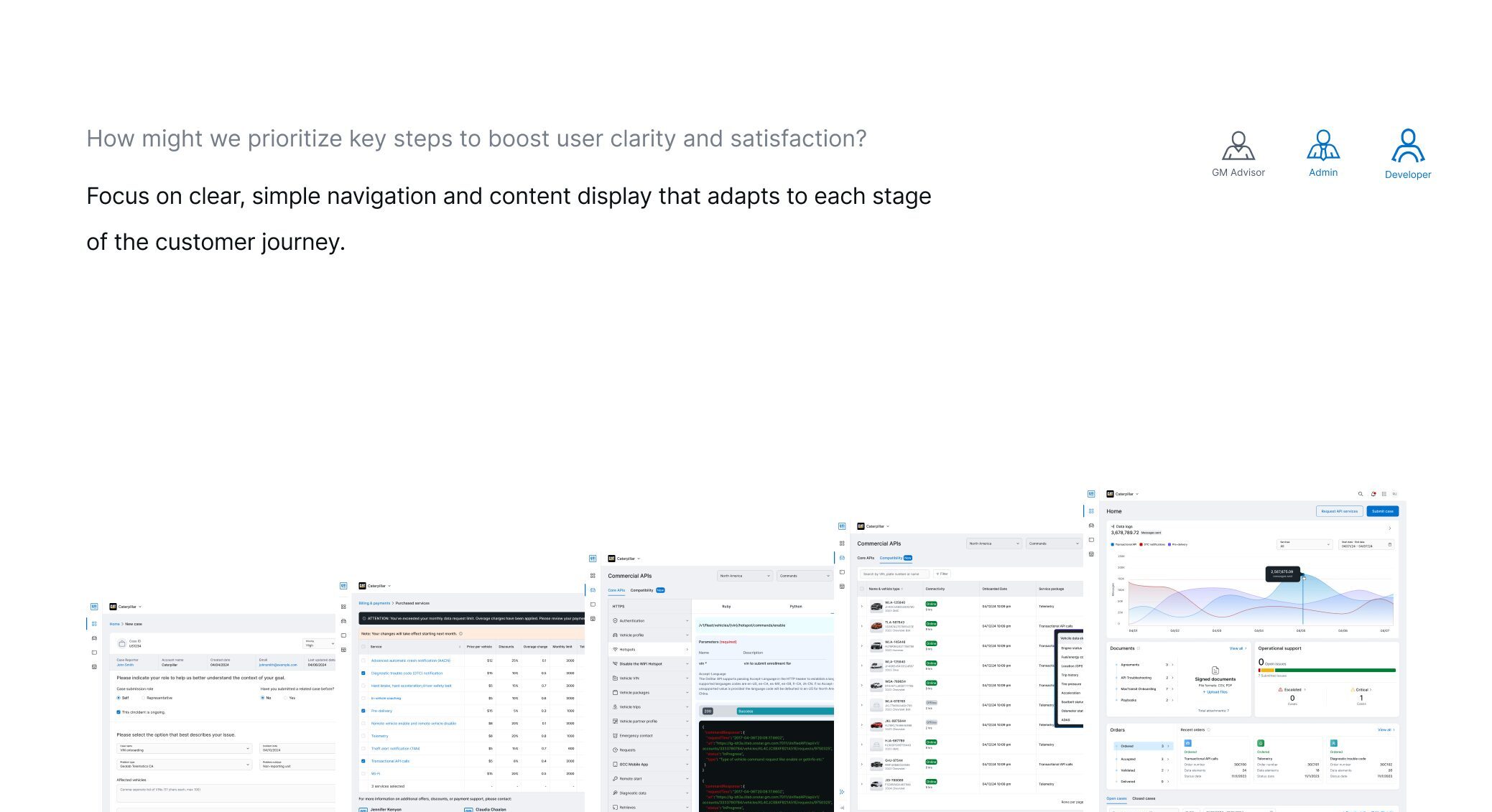
The final concept transformed a fragmented and operationally heavy experience into a clearer, more scalable service model. It created a stronger foundation for partner adoption, service visibility, and future platform growth.